
Risk detection and safety
Perimeter protection and openings, personal protective equipment, lifting zones, access permissions, and working procedures.
Following the introduction of new regulations in the construction sector, HUBTECH has developed, together with technology companies in Israel and around the world, a wide range of technologies made accessible as tools for the technological management of construction sites.
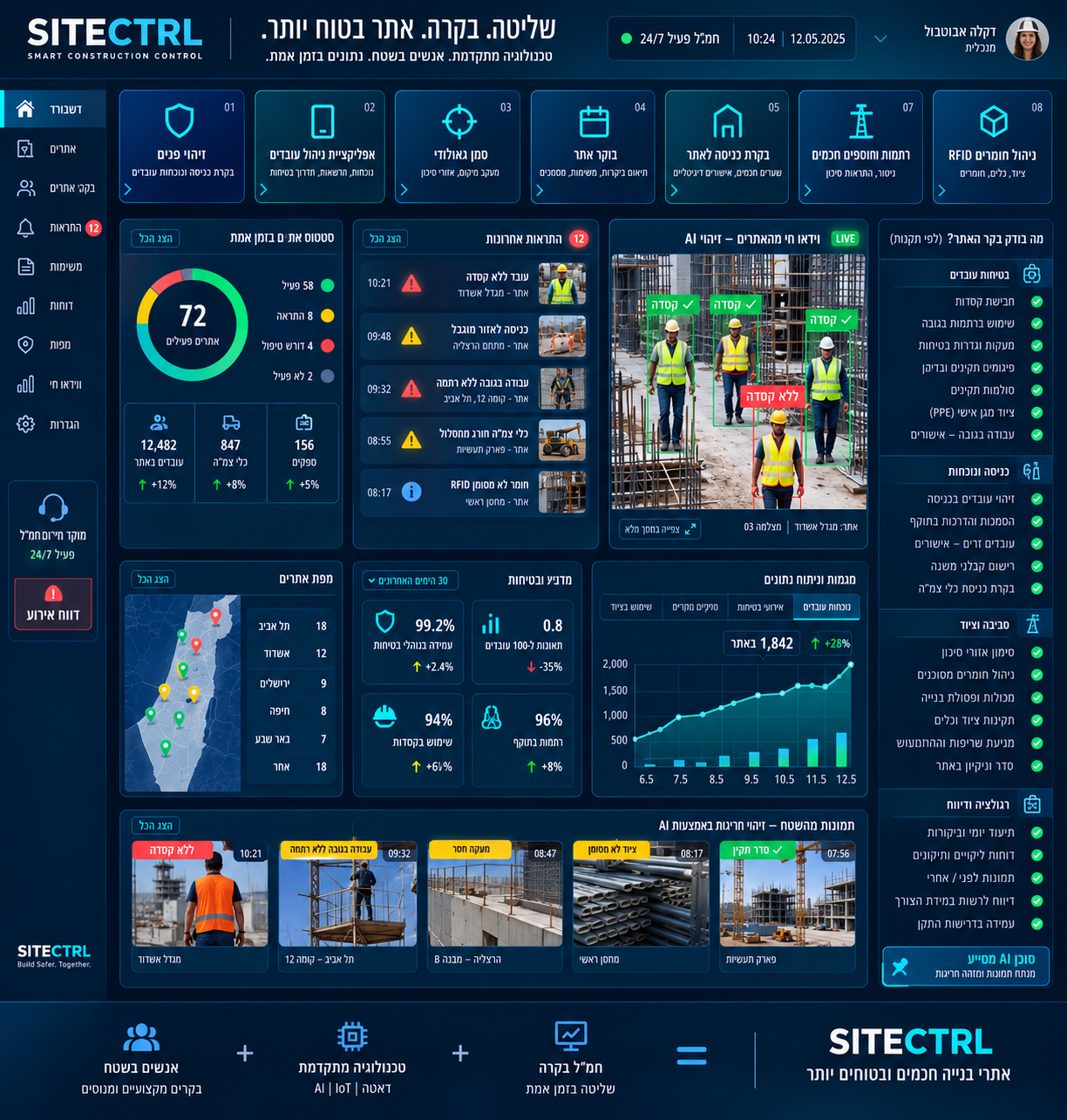
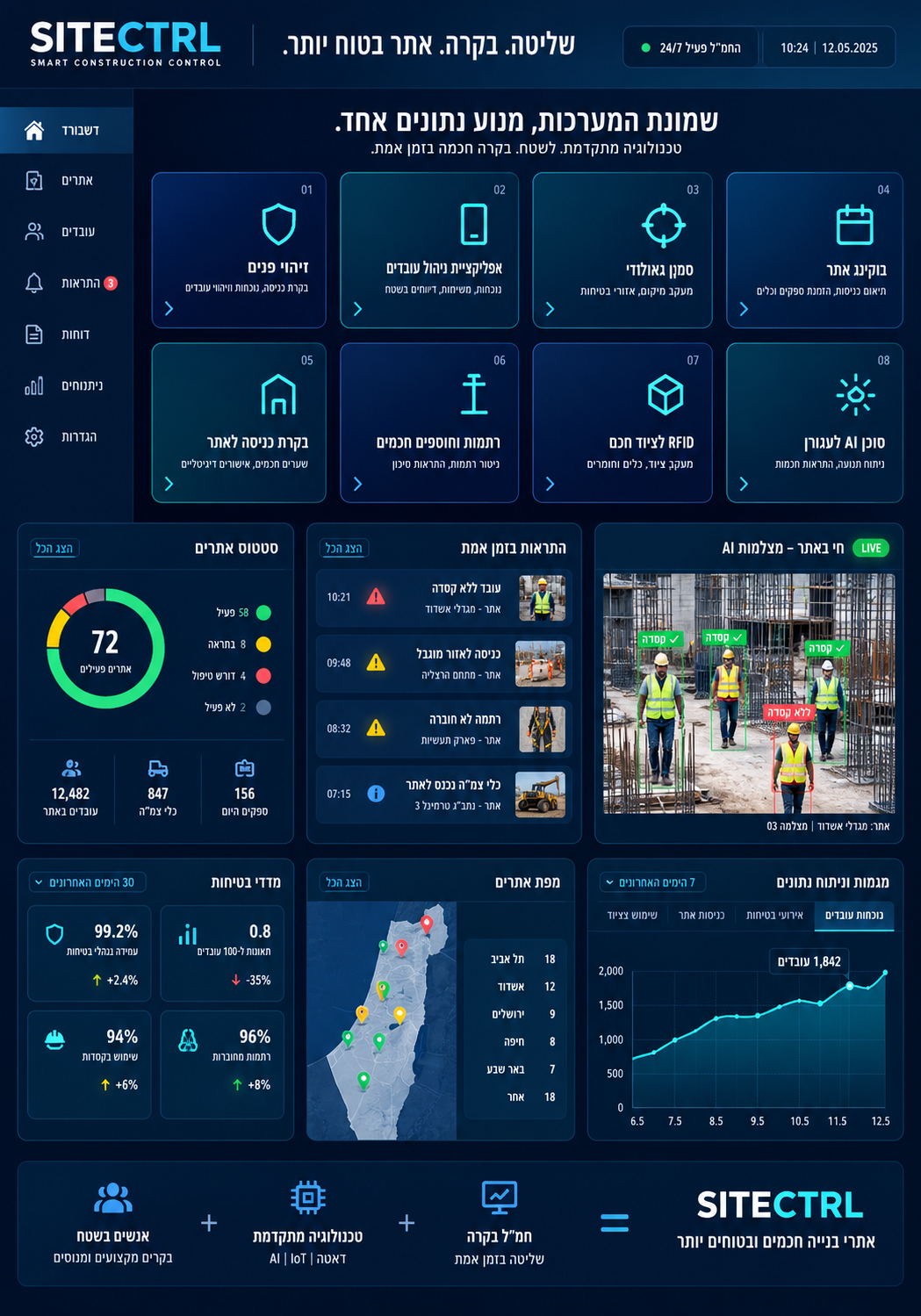
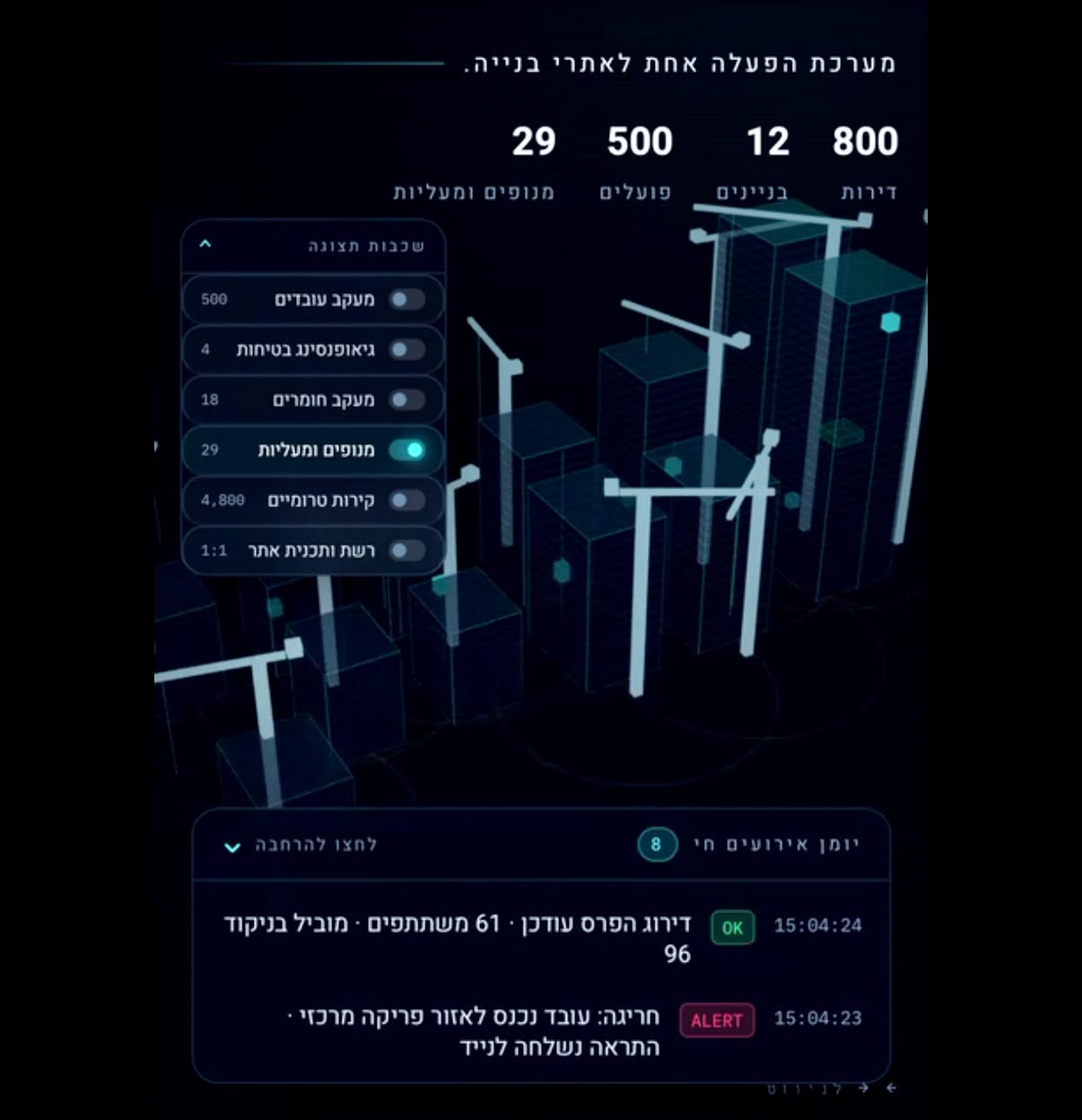
HUBTECH’s innovation center operates an online control and observation unit for construction sites through a managed 24/7 control center that issues real time alerts about faults and irregular events.
In addition, all managed sites are connected to advanced technologies through artificial intelligence infrastructure that produces real time information for analyzing activity across the construction site.
A professional program combining construction-site safety control with monitoring systems, artificial intelligence, and a smart dashboard. Participants learn to identify risks, manage alerts, document findings, and follow corrective actions in a shared digital environment for developers and on-site professionals.
The controller works with the client, developer, site management, and safety professionals. The role combines field inspections with technological monitoring, consolidates information from cameras, sensors, and operational systems, and turns findings into documented actions.
Perimeter protection and openings, personal protective equipment, lifting zones, access permissions, and working procedures.
Site maps, open findings, severity levels, assigned owners, response times, treatment status, and proof of closure.
Planning camera and sensor coverage, testing communications, defining false-alert handling, permissions, and pilot success metrics.
Digital checklists, event scenarios, online reports, control-center workflows, and a final technology control plan for a selected site.
A smart control environment that consolidates the site map, open findings, severity, assigned owner, due date, treatment status, and closure evidence.
Trips, waiting time, calls by floor, worker movement, and material tracking.
Active time versus waiting time and opportunities to improve equipment utilization.
Worker counts by floor and hour compared with the work plan.
Delivery slots and coordination between suppliers and subcontractors.
Detection of risks, unusual activity, and safety events, with immediate notification to the control center.
A consolidated view of equipment condition, recurring faults, and maintenance priorities.
Comparison between site activity and the work plan to identify schedule deviations early.
Data based supervision of attendance, activity areas, and operational loads across the site.
Learn to operate advanced control systems and turn site data into practical management decisions.
Leave your details and our team will contact you to assess your site’s needs and connect it to the service.